
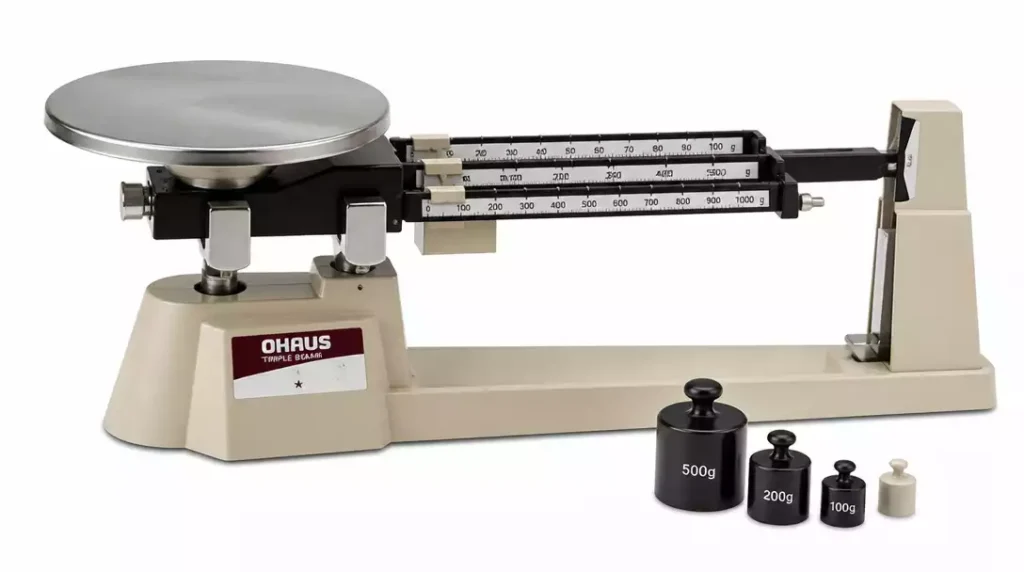
In the realm of precision weighing, a triple beam scale stands as a timeless tool, blending simplicity with accuracy. Its mechanical nature provides a unique hands-on experience that digital balances cannot match. Understanding how to use this scale effectively can enhance both educational and practical applications.
What You Will Learn
- A triple beam scale uses levers to measure mass accurately without the need for batteries.
- Familiarity with key parts, like the base, riders, and calibration screw, is essential for accurate measurements.
- Understanding the differences between a triple beam scale and a digital balance can guide your selection for various applications.
- Safety precautions, like maintaining a clear work area and proper handling, are crucial when using scales in classrooms or labs.
Getting Started with a Triple Beam Scale: Understanding Its Components
If you’re new to weighing, a triple beam scale may seem a bit daunting at first. However, it’s a classic tool that helps ensure precise measurements, whether for science experiments or cooking. In this section, I’ll walk you through the essential components of a triple beam scale and explain how it operates!
At its core, a triple beam scale uses a system of levers to balance the weight of an object against known weights. By moving the riders along the beams, you can determine the mass of various items accurately. Let’s dive deeper into what makes this scale tick.
What is a Triple Beam Scale and How Does It Work?
A triple beam scale operates on a simple yet effective principle of balance. It consists of three beams that can hold different weights, allowing you to measure mass with great accuracy. As you adjust the riders, you shift the balance point until the scale rests evenly, indicating the weight of your object.
- Utilizes a system of levers for precise weighing
- Comes with three separate beams for different weight increments
- Ideal for classrooms, laboratories, and even kitchens!
The beauty of using a triple beam scale lies in its mechanical operation. No batteries or digital screens—just pure physics at play! This makes it reliable and easy to maintain. For a broader understanding of mechanical scales, you might find our guide on how to use a mechanical scale insightful.
Key Parts of a Triple Beam Balance
To master the use of your triple beam scale, it’s essential to familiarize yourself with its key parts. Each component plays a critical role in achieving accurate measurements.
- The base which supports the entire structure
- Riders for measuring different weight values
- The calibration screw for adjustments and accuracy
- The weighing pan where items are placed
Understanding these components will not only help you use the scale more effectively but also troubleshoot any issues that may arise during your measurements.
Identifying the 500g, 100g, and 10g Riders
Each rider on a triple beam scale corresponds to a specific weight: the 500g rider is the largest, followed by the 100g and 10g riders. By moving these riders, you can add up the total weight of an item you’re measuring.
- The 500g rider is positioned furthest from the pivot point for larger weights
- The 100g rider allows for mid-range measurements
- The 10g rider is perfect for fine-tuning your results
By combining these riders, you can achieve precise measurements to suit your needs!
The Role of the Calibration Screw and Notch
The calibration screw is your best friend when it comes to ensuring accuracy. It allows you to make adjustments to the scale so that it reads zero when no weight is placed on the pan. Finding the right notch is crucial, as it helps you align the scale correctly for precise readings.
- Check the calibration screw before starting any measurements
- Use the notch to set your scale to zero
- Regular calibration ensures consistent accuracy over time
With proper calibration, you can trust that your scale will deliver reliable results every time!
Understanding the Weighing Pan and its Importance in Measurements
The weighing pan is where all the action happens! It’s essential to ensure that it’s clean and free from any debris before placing your items. A dirty pan can lead to inaccurate readings, so always give it a quick check!
- Ensure the weighing pan is level and unobstructed
- Keep it clean for improved accuracy
- Use the pan only for weighing—avoid dropping items!
By paying attention to the weighing pan’s condition, you can significantly improve your measurement accuracy and maintain the longevity of your scale.
Pro Tip
To enhance your accuracy with a triple beam scale, always ensure that the scale is at eye level while you’re taking measurements. This prevents parallax errors that can occur when the reading is viewed from an angle. A simple adjustment can make a significant difference in your results!
Practical Applications and Considerations for Using a Triple Beam Scale
Using a triple beam scale can be incredibly beneficial in various settings, especially when precision is key. Knowing when to opt for a triple beam scale versus a digital balance can enhance your measuring experience. If you’re in an educational setting or a laboratory, understanding these differences can ensure you’re making the right choice!
For instance, I often find that triple beam scales are ideal for teaching students about weight measurement principles. They allow for hands-on learning, which is invaluable. Let’s dive into some factors that could guide your decision.
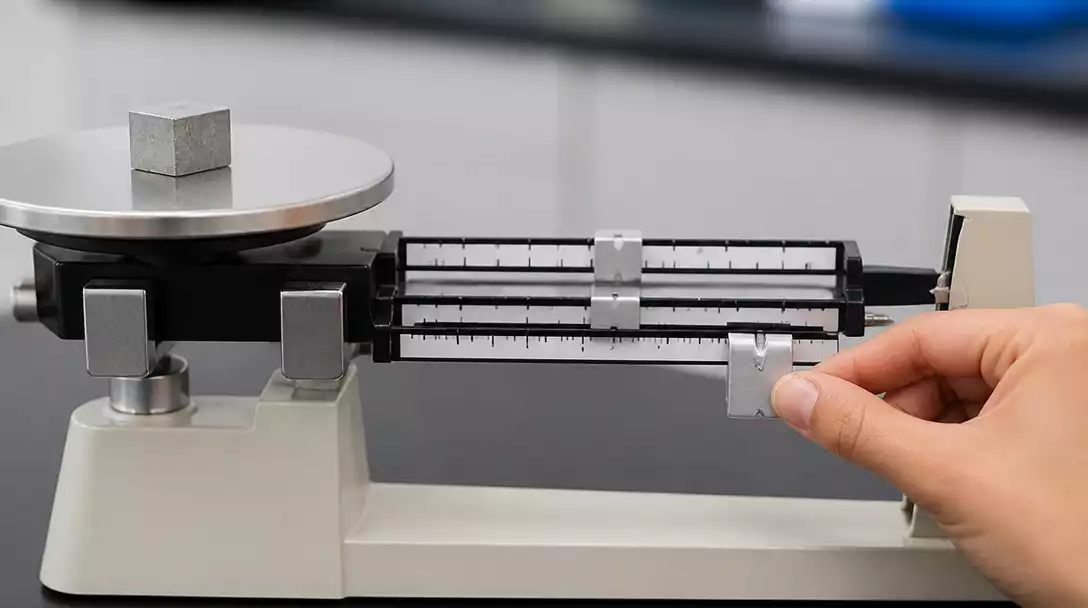
When to Use a Triple Beam Scale vs. Digital Balances
Choosing between a triple beam scale and a digital balance can depend on several considerations. Here’s a quick comparison to help you make the right choice:
- Cost: Triple beam scales are generally less expensive than digital counterparts.
- Durability: Mechanical scales often withstand rough handling and environmental factors better.
- Educational Value: They provide a hands-on experience, making them great for classrooms.
- Power Source: No batteries are needed, which ensures they work whenever you need them.
If you’re looking to teach students about the mechanics of weighing, a triple beam scale is a fantastic tool. They can visually grasp how mass is measured through the movement of riders! For more details on balance scales, refer to our article on how to use a balance scale.
Advantages of Mechanical Scales in Educational Settings
In educational environments, a triple beam scale has distinct advantages that can enhance the learning experience. Here are a few:
- Hands-on Learning: Students can physically manipulate the scale, reinforcing concepts of mass and balance.
- Critical Thinking: Using a mechanical scale encourages students to think critically about calibration and measurement methods.
- Instant Feedback: The immediate reading allows for quick assessments and learning opportunities.
As a business that values educational tools, we believe that offering students the chance to experiment with a triple beam scale fosters a deeper understanding of scientific principles!
Safety Tips for Laboratory and Classroom Use
When using a triple beam scale in a laboratory or classroom, safety should always be a priority. Ensuring accurate measurements while maintaining a safe environment helps promote effective learning. Here are some tips to keep in mind:
- Clear Work Area: Always ensure that the measuring area is clean and free of clutter.
- Proper Handling: Teach students to handle the scale gently to prevent damage.
- Avoid Overloading: Make sure the total weight does not exceed the scale’s capacity.
- Calibrate Regularly: Regular calibration checks can prevent measurement errors.
Taking these precautions can help maintain the integrity of your measurements and extend the lifespan of your scale. At our company, we always emphasize the significance of safety in any experimental setup!
Ensuring Accuracy in Weighing Procedures and Techniques
Ultimately, accuracy in weighing procedures is crucial to achieving reliable results. Here are a few techniques to ensure your measurements are as precise as possible:
- Use a Level Surface: Always place your scale on a stable, level surface to avoid inaccurate readings.
- Double-Check Zeroing: Regularly confirm that the scale is zeroed before use.
- Be Mindful of Environmental Factors: Avoid placing your scale near drafts, vibrations, or direct sunlight.
By following these techniques, you can help ensure that your triple beam scale delivers accurate and reliable measurements every time! For more details on keeping your scale accurate, check out our guide on how to set a digital scale to zero, which shares similar principles for zeroing.
Frequently Asked Questions (FAQs) About Triple Beam Scales
- What is a triple beam scale used for?
A triple beam scale is used for precisely measuring the mass of objects, primarily in educational settings, laboratories, and sometimes kitchens, due to its mechanical accuracy and hands-on nature. - How do you read a triple beam scale?
To read a triple beam scale, you adjust the riders on the three beams (typically 500g, 100g, and 10g) until the pointer aligns with the zero mark. The total mass is the sum of the values indicated by the positions of the riders on their respective beams. - What are the key components of a triple beam scale?
The key components include the base, weighing pan, three beams with riders (500g, 100g, 10g), a pointer, and a calibration screw for zeroing the scale. - Why is calibration important for a triple beam scale?
Calibration is crucial because it ensures the scale reads zero when nothing is on the weighing pan. This baseline accuracy is essential for obtaining reliable and precise measurements of any object placed on the scale. - What are the advantages of a triple beam scale over a digital balance in educational settings?
Triple beam scales offer hands-on learning, encouraging students to understand the mechanical principles of mass measurement. They are also durable, cost-effective, and do not require batteries, making them reliable tools for teaching critical thinking and measurement methods.
Recap of Key Points
Here is a quick recap of the important points discussed in the article:
- Understanding Components: Familiarize yourself with the base, riders, calibration screw, and weighing pan for effective use.
- Calibration is Key: Regularly check the calibration screw and use the notch to ensure the scale reads zero for accurate measurements.
- Clean Weighing Pan: Always ensure the weighing pan is clean and unobstructed to avoid inaccurate readings.
- Mechanical Advantages: Triple beam scales are durable, cost-effective, and provide hands-on learning experiences in educational settings.
- Safety Precautions: Maintain a clear work area, handle the scale properly, and avoid overloading to ensure safety in classrooms and laboratories.
- Accuracy Techniques: Use a level surface, double-check zeroing, and be mindful of environmental factors to enhance measurement precision.





