
In the world of geometry, understanding scale factors is not just an academic exercise; it’s a vital skill that impacts architecture, design, and even everyday tasks. Have you ever wondered how models maintain their proportions while being resized? Scale factors hold the key to this intricate balance.
What You Will Learn
- A scale factor is a ratio that relates the dimensions of a shape to its scaled version, allowing for precise enlargement or reduction.
- Applying a scale factor ensures that the proportions of shapes remain consistent, which is crucial in fields like architecture and engineering.
- To calculate a scale factor from two shapes, divide the dimensions of the new shape by those of the original shape.
- Resources such as online courses and interactive tutorials can enhance your understanding and practical application of scale factors.
Basics of Scale Factor
Let’s dive into the world of scale factors! A scale factor is a number that scales, or multiplies, a quantity. In geometry, this means we can change the size of a shape while keeping its proportions intact. Understanding this concept is essential for anyone working with shapes, whether in classrooms or design environments.

Scale factors are not just numbers; they are tools that help us manipulate shapes in a way that maintains their integrity. They allow us to enlarge or reduce shapes while keeping all the angles and relationships the same. This is why grasping this concept is crucial for students and professionals alike!
What is a Scale Factor?
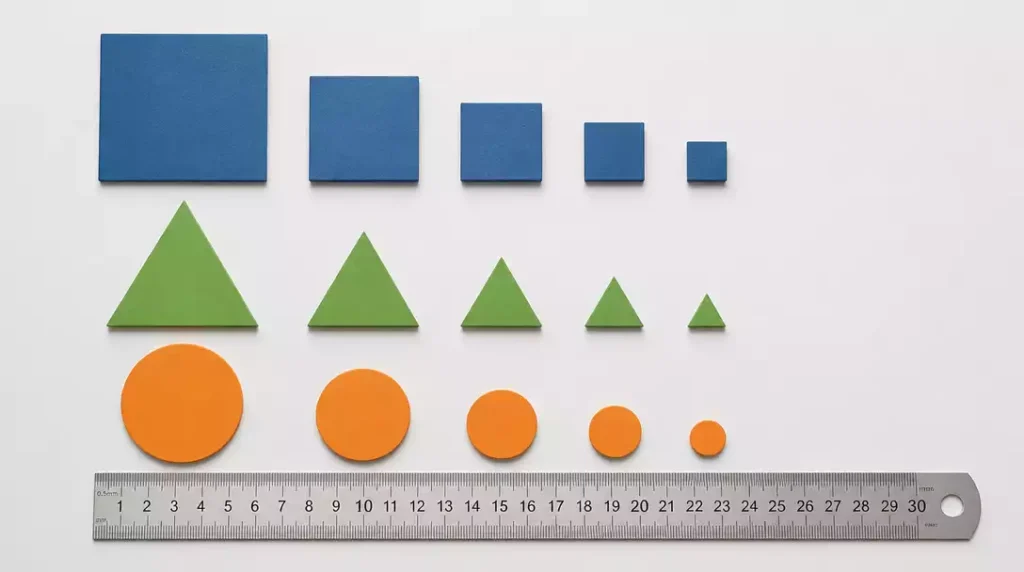
A scale factor can be thought of as a ratio that relates the dimensions of a shape to its scaled version. For instance, if we have a triangle with a scale factor of 2, each of its sides will be doubled in length when we scale it up. Likewise, a scale factor of 0.5 would reduce its size by half.
- Scale factors can be expressed as fractions or whole numbers.
- A factor greater than 1 enlarges a shape.
- A factor less than 1 reduces a shape.
Understanding these key points makes it easier to apply scale factors appropriately in various scenarios. They play a vital role in everything from simple geometric calculations to complex architectural designs!
Why is Scale Factor Important in Geometry?
Scale factors are fundamental in geometry as they help maintain proportionality. When enlarging or reducing a shape, we want to ensure that the relationships between sides remain constant. This is especially important in fields like architecture, engineering, and art, where precision is key.
- They help in creating accurate models.
- Scale factors ensure consistency in design.
- They are essential for calculating area and volume changes.
Incorporating scale factors into our work allows us to represent objects at a manageable size while preserving their true characteristics. This can be the difference between a successful project and a flawed design! For more insights into accurate measurements, consider learning how to read a gram scale, which is vital for precision in many applications.
Quick Summary
Here’s a brief recap of the key points discussed so far:
- A scale factor is a number that multiplies a quantity, allowing us to resize shapes while maintaining their proportions.
- Scale factors can be greater than 1 for enlargements or less than 1 for reductions, and they help preserve the relationships between sides of a shape.
- Understanding scale factors is essential in fields such as architecture, engineering, and art for creating accurate models and designs.
Summarizing Key Insights on Scale Factor Usage
As we wrap up our discussion on scale factors, it’s essential to highlight the vital points that can help you apply these concepts effectively. Remember, a scale factor allows you to resize shapes while maintaining their proportions, whether you’re enlarging or reducing. This concept is fundamental in various fields, including architecture, art, and even everyday tasks like mapping!
Here’s a quick recap of how to use scale factors effectively:
- Identify the original size of the shape.
- Determine the desired size by applying a scale factor.
- Use multiplication for enlargements and division for reductions.
- Always check your work by comparing proportions.
By following these steps, you can confidently tackle any problem involving scale factors! If you’re looking to understand measurement basics, a good starting point is to learn how to read an analog scale, which shares principles of proportion and measurement.
FAQs about Scale Factors
Here are some frequently asked questions to further clarify the concept of scale factors:
- What is a scale factor in simple terms?
A scale factor is a number used to enlarge or reduce the size of a shape or object while maintaining its original proportions. - How do you calculate a scale factor?
To calculate a scale factor, you divide the dimension (e.g., length, width) of the new (scaled) shape by the corresponding dimension of the original shape. - When is a scale factor used in real life?
Scale factors are used in architecture for blueprints and models, in engineering for designing components, in cartography for maps, and in art for replicating designs at different sizes. - What happens if the scale factor is less than 1?
If the scale factor is less than 1 (e.g., 0.5 or 1/2), the shape will be reduced in size. - What happens if the scale factor is greater than 1?
If the scale factor is greater than 1 (e.g., 2 or 3), the shape will be enlarged. - Can scale factors be applied to irregular shapes?
Yes, scale factors can be applied to any shape, regular or irregular, as long as all dimensions are scaled by the same factor to maintain proportionality.
Addressing Common Questions About Scale Factor Applications
Many students and enthusiasts often have questions about applying scale factors in real-life scenarios. Here are some of the common queries I’ve encountered:
- How do I choose the right scale factor? The choice depends on the context; for instance, a scale factor of 2 enlarges the shape, while a fraction less than 1 reduces it.
- What if I need to find a scale factor from two shapes? You can calculate it by dividing the dimensions of the new shape by the original shape’s dimensions.
- Can I use scale factors for irregular shapes? Absolutely! While it may be more complex, you can apply scale factors to any shape, ensuring to maintain proportions throughout.
These questions often arise in my classes, and addressing them provides clarity for those eager to master scale factors!
Encouraging Further Exploration and Practice
Resources for Mastering Scale Factors
If you’re looking to dive deeper into the world of scale factors, I’ve curated some excellent resources for you. Here’s what I recommend:
- Online Courses: Websites like Khan Academy and Coursera offer comprehensive lessons on geometry including scale factors.
- Books: Check out “Geometry for Dummies” for an engaging overview of geometric principles.
- Worksheets: Websites like Math-Aids.com provide free worksheets to practice scale factor problems.
Utilizing these resources will certainly enhance your understanding and application of scale factors!
Interactive Tutorials and Video Lessons for Enhanced Learning
Sometimes, visual learning can make a world of difference. Interactive tutorials and video lessons can enrich your experience. Here are some platforms I recommend:
- YouTube: Channels like Math Antics and Eddie Woo’s channel create engaging content on scale factors.
- Edpuzzle: Look for interactive video lessons that allow you to practice as you watch.
- Geogebra: This tool lets you manipulate shapes and see the effects of scale factors in real-time.
These tools can offer hands-on practice, making learning both fun and effective! To truly master the practical application of scale, understanding how to calculate scale factor is a fundamental skill that complements these resources.
Invitation to Share Experiences with Scale Factor Challenges
I love hearing from my students and fellow educators about their experiences with scale factors. Have you faced any challenges or interesting scenarios? Sharing your experiences can be incredibly valuable for others encountering similar situations!
Feel free to drop your stories in the comments or reach out through my business website. Let’s learn from each other’s journeys in mastering scale factors!
Recap of Key Points
Here is a quick recap of the important points discussed in the article:
- A scale factor is a number that enlarges or reduces a shape while maintaining its proportions.
- Scale factors can be expressed as whole numbers or fractions, with factors greater than 1 enlarging a shape and those less than 1 reducing it.
- Maintaining proportionality is crucial in fields like architecture and engineering, as it ensures consistency and accuracy in designs.
- To apply scale factors effectively, identify the original size, determine the desired size, and use multiplication for enlargements and division for reductions.
- Resources such as online courses, books, and worksheets can aid in mastering scale factors.