
Have you ever considered how a simple tool can transform your understanding of measurement? Balance scales are more than just instruments; they are gateways to precision and accuracy in various fields.
What You Will Learn
- Balance scales operate on the principle of equilibrium, providing accurate mass measurements through comparison with known weights.
- Understanding the distinction between mass and weight is crucial; mass remains constant while weight varies with gravity.
- Different types of balance scales, such as beam and triple-beam scales, cater to various measurement needs.
- Consistent calibration and consideration of external factors are essential for accurate measurements.
- Maintaining safety precautions while using balance scales, particularly in laboratory settings, is vital to avoid accidents.
Basics of a Balance Scale
Have you ever wondered how a balance scale works? It’s actually quite fascinating! A balance scale measures the mass of an object by comparing it to known weights. This tool is essential in various fields, from classrooms to laboratories, providing accurate readings for both students and professionals alike.
A balance scale operates on the principle of equilibrium. When the weights on either side are equal, the scale is balanced, indicating that the unknown object’s mass is equal to the known weights. This simple yet effective mechanism provides incredibly reliable measurements.
What is a Balance Scale and How Does it Work?
At its core, a balance scale consists of a beam that pivots on a fulcrum. When you place an object on one side and weights on the other, the beam will tilt until it reaches a point of balance. This equilibrium point tells you the mass of the object. The beauty of a balance scale lies in its simplicity!
- Uses a beam and fulcrum for measurement
- Relies on equilibrium for accurate readings
- Common in educational and scientific settings
For anyone just starting to explore weighing systems, understanding how this balance mechanism works can enhance your confidence in using it. Plus, it’s a fantastic way to introduce concepts of mass and weight! For more insights into how different scales operate, you might be interested in how a scale works in general.
Different Types of Balance Scales: Beam vs. Triple-Beam
There are various types of balance scales available, but two popular ones are beam scales and triple-beam scales. Each serves its purpose, whether in a classroom or a lab. Let’s break down the differences:
- Beam Scale: Typically a simpler design, ideal for basic mass measurements.
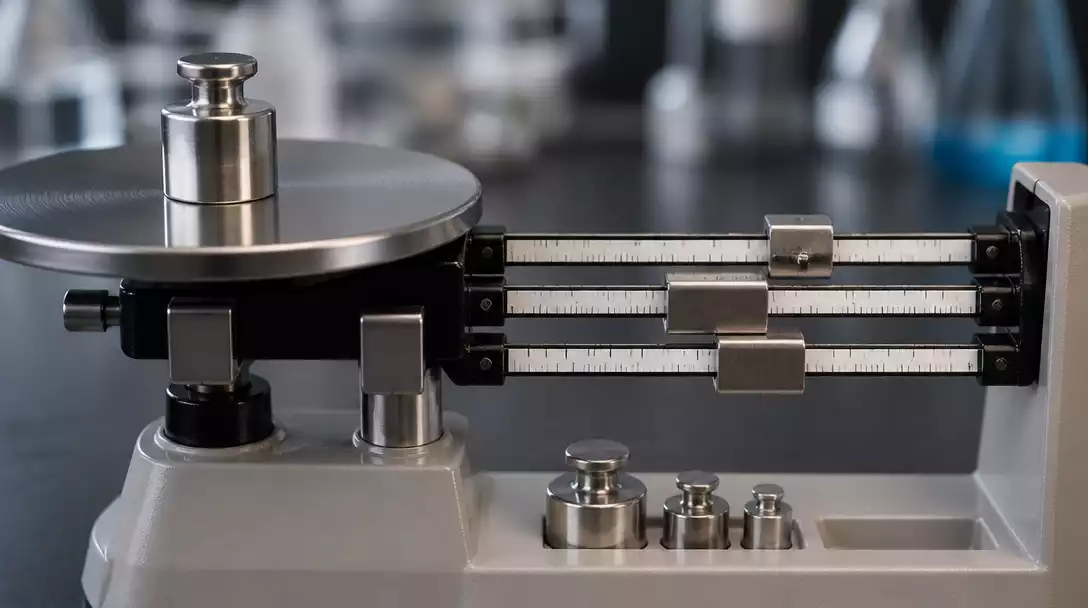
- Triple-Beam Scale: Offers more precision, allowing for detailed measurements with multiple weights.
Choosing the right scale can depend on your specific needs. For instance, if you’re measuring larger items or need precise readings, the triple-beam scale is your go-to tool!
The Balance Principle: Understanding Mass and Weight Measurement
The fundamental principle behind balance scales is the distinction between mass and weight. Mass is the quantity of matter in an object, while weight is the force exerted by gravity on that mass. In everyday scenarios, though, we often use the terms interchangeably. Here’s why it matters:
- Mass measurements remain constant regardless of location.
- Weight can change based on gravitational pull.
- A balance scale measures mass by comparing it to known weights.
Understanding these concepts not only helps with accurate measurements but also enriches your knowledge of physics, which is crucial for students and professionals alike!
We Want to Hear From You!
What challenges have you faced while using a balance scale? Share your experiences and tips below:
Frequently Asked Questions About Balance Scales
- Q: What is the primary function of a balance scale?
- A: A balance scale primarily measures the mass of an object by comparing it to known standard weights.
- Q: How does a balance scale achieve accurate measurements?
- A: It achieves accuracy through the principle of equilibrium. When the object’s mass equals the known weights, the beam becomes level, indicating a precise measurement.
- Q: What is the difference between mass and weight in the context of a balance scale?
- A: Mass is the amount of matter in an object and remains constant, while weight is the force of gravity acting on that mass and can vary with location. A balance scale measures mass.
- Q: What are the main types of balance scales mentioned?
- A: The article mentions beam scales and triple-beam scales, with triple-beam scales offering greater precision.
- Q: Why is calibration important for balance scales?
- A: Regular calibration ensures the scale provides accurate and reliable measurements by adjusting it to a known standard before use.
- Q: What external factors can affect the accuracy of a balance scale?
- A: External factors such as air currents, temperature fluctuations, and vibrations can all impact the accuracy of balance scale readings.
Summing Up the Key Takeaways on Balance Scales
It’s crucial to remember that accurate measurement techniques are the backbone of any scientific endeavor, whether you’re in a classroom, lab, or even at home. A balance scale is not just a tool; it’s a gateway to precision and reliability in your measurements. Mastering the use of a balance scale is essential for anyone looking to achieve consistency in weighing.
When you take the time to calibrate your scale properly, interpret readings accurately, and account for environmental factors, you’re setting yourself up for success. Here are some key takeaways that can help reinforce your understanding:
- Always zero your balance scale before use.
- Familiarize yourself with the different components: riders and pointers.
- Consider external factors, such as air currents and temperature, that can affect accuracy.
By keeping these points in mind, you’ll be on your way to becoming a confident user of balance scales!
Reviewing the Importance of Accurate Measurement Techniques
Accurate measurement techniques are not merely important; they are vital for producing reliable results. Whether you’re conducting an experiment in a science lab or baking a cake at home, the smallest error can lead to significant discrepancies. Consistency in measurements fosters confidence in your findings and outcomes.
To ensure you’re measuring accurately, consider these effective practices:
- Regularly check calibration of your balance scale.
- Use the same weighing method each time to ensure consistency.
- Understand the limits of your scale to avoid overloading it.
As a frequent user of balance scales, I can attest to how adopting these practices has improved my results, whether I’m experimenting with new recipes or conducting physics experiments! If you’re using a digital scale, you might find our guide on how to calibrate a digital scale particularly helpful.
Getting Started: Your Next Steps with Balance Scales
Now that you have a solid grasp of balance scales, it’s time to take the next steps! Engaging with balance scales can be an exciting journey of discovery, and I encourage you to dive deeper. One of the best ways to enhance your skills is to utilize available resources. Here are some recommendations:
- Online tutorials specific to your balance type.
- Workshops hosted by local educational institutions.
- Books and guides that focus on measurement precision.
By tapping into these resources, you can continue to improve your understanding and proficiency. Remember, knowledge is power!
Resources for Further Learning and Improvement
There’s always more to learn when it comes to balance scales! To keep enhancing your skills, consider exploring these valuable resources:
- Webinars on advanced balance techniques.
- Peer-reviewed articles on measurement accuracy.
- Guides from manufacturers that explain scale features.
Utilizing these resources can provide you with fresh insights and allow you to connect with other enthusiasts. With the right knowledge, you can turn your measurements into reliable data!
Understanding Safety Precautions When Using Weighing Systems
Safety should always be a priority when using balance scales, especially in a lab setting. Accidents can happen if you’re not careful, so here are a few essential precautions to keep in mind:
- Always handle your balance scale with care.
- Ensure that the scale is placed on a stable, flat surface.
- Keep your workspace organized to avoid spills and accidents.
By following these safety tips, you can focus on what truly matters: achieving accurate and reliable measurements!
Call to Action: Try Using a Balance Scale Today!
Why wait? Now is the perfect time to put your knowledge into action! I encourage you to find a balance scale—be it in a lab, kitchen, or classroom—and start practicing today. Experiment with different weights, test your calibration skills, and see how precise your measurements can be!
As someone who has spent considerable time working with balance scales, I can assure you that the more you practice, the more comfortable and skilled you will become. Don’t hesitate to reach out if you have questions or need support along the way! If you’re curious about measuring liquids accurately, check out our guide on how to measure liquid on a scale.
Recap of Key Points
Here is a quick recap of the important points discussed in the article:
- A balance scale measures mass by comparing an unknown object to known weights.
- Understanding the difference between mass and weight is crucial for accurate measurements.
- Regularly calibrate your balance scale and zero it before use for precise results.
- Consider external factors like air currents and temperature that can affect accuracy.
- Utilize resources like online tutorials and workshops to enhance your understanding of balance scales.
- Always prioritize safety by handling scales with care and ensuring a stable workspace.